

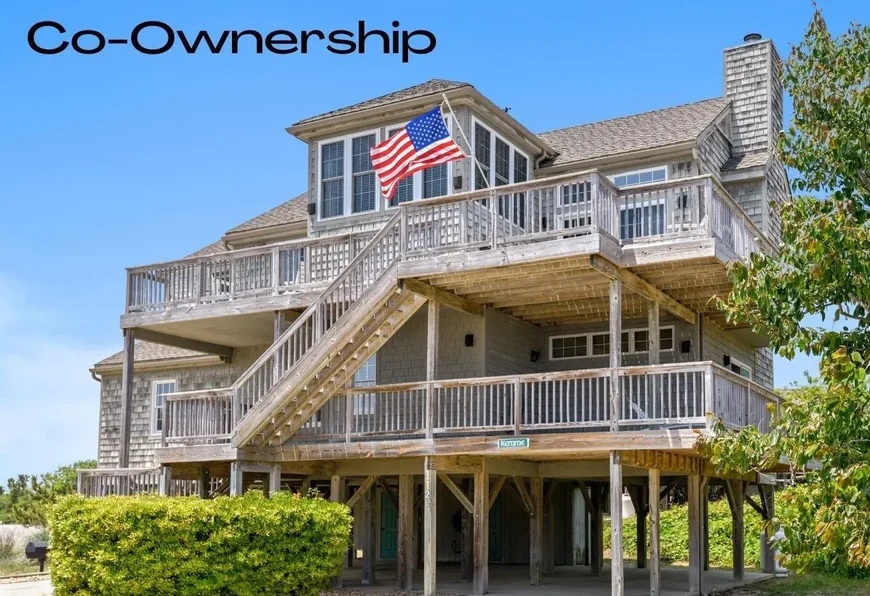
Outer Banks Co-Ownership Properties: Pros, Cons, and the Investment Question
For buyers who love the Outer Banks but do not want the cost or responsibility of full second-home ownership, co-ownership can be an appealing option. In many Outer Banks communities, this arrangement is deeded as a 1/10 ownership interest, which means the buyer owns a real share of the property rather than simply purchasing the right to use it for a week or two. In practical terms, owners typically receive about five weeks of use each year on a rotating schedule, while expenses such as taxes, insurance, utilities, maintenance, and management are shared among the ownership group.
What Is a 1/10 Deeded Co-Ownership Property?
A deeded co-ownership property is not the same as a traditional timeshare. With a timeshare, buyers usually purchase usage rights for a certain period. With deeded co-ownership, buyers receive a recorded ownership interest in the real estate itself. That distinction matters because the owner holds an actual stake in the property and may benefit if the property value rises over time. Outer Banks co-ownership homes commonly divide the year among ten owners, with rotating use periods that spread access across different seasons. Many communities also have management in place to handle cleaning, maintenance, and turnover between owners.
Pros of Co-Ownership in the Outer Banks
- Lower entry cost than purchasing an entire beach home, especially for oceanfront or high-demand locations. Check this link out - https://www.realestateouterbanks.org/co-ownership/under-100000/
- True real estate ownership through a recorded deed, rather than a simple right-to-use arrangement.
- Shared ongoing expenses, which can make taxes, insurance, utilities, and upkeep more manageable.
- Less hands-on responsibility because many communities use professional management for cleaning, maintenance, and scheduling.
- A practical fit for buyers who realistically plan to use a vacation home only a few weeks each year.
- Potential flexibility to rent unused weeks or trade time with other owners, depending on the governing documents and community rules.
- Decision-making can be slow because updates, renovations, and major repairs often require agreement from multiple owners.
- Some properties may feel dated if the ownership group does not support reinvestment over time.
- Monthly or annual fees can be significant because they often include management, reserves, taxes, insurance, utilities, and routine maintenance.
- Lenders do not typically offer mortgages on these types of fractional ownership properties, which means many purchases are cash transactions and financing options may be very limited.
- Resale may take longer because the pool of buyers is narrower than for traditional single-family homes or condos.
- Owners must be comfortable with scheduling rules, community restrictions, and possible limitations on pets, rentals, or guest use.
Cons of Co-Ownership in the Outer Banks
- Decision-making can be slow because updates, renovations, and major repairs often require agreement from multiple owners.
- Some properties may feel dated if the ownership group does not support reinvestment over time.
- Monthly or annual fees can be significant because they often include management, reserves, taxes, insurance, utilities, and routine maintenance.
- Lenders do not typically offer mortgages on these types of fractional ownership properties, which means many purchases are cash transactions and financing options may be very limited.
- Resale may take longer because the pool of buyers is narrower than for traditional single-family homes or condos one can search, HERE.
- Owners must be comfortable with scheduling rules, community restrictions, and possible limitations on pets, rentals, or guest use.
Is Co-Ownership a Good Investment?
The answer depends on what the buyer means by investment. If the goal is to maximize appreciation, liquidity, and financing options, a full property purchase will usually offer more control and potentially broader resale appeal. However, if the goal is to combine personal enjoyment with a lower-cost entry into an Outer Banks property, deeded co-ownership can make sense. Because the buyer owns a real fractional interest, there is potential for appreciation, and in some cases unused weeks may generate rental income. That said, buyers should be cautious about viewing co-ownership primarily as a high-return investment. Shared decision-making, ongoing fees, limited control, a smaller resale market, and the fact that lenders do not typically offer mortgages on these properties can reduce the upside and narrow the pool of future buyers. For many buyers, the strongest value is not pure return on investment but a blend of lifestyle, predictable access to the beach, and shared carrying costs.
Questions Buyers Should Ask Before Purchasing
- How are usage weeks assigned, rotated, and traded?
- What do the monthly or annual fees cover, and how often have they increased?
- Is there a reserve fund for future repairs and replacements?
- What restrictions apply to rentals, pets, guests, and owner improvements?
- How are major decisions made, and what percentage of owners must approve them?
- Are recent updates keeping the property competitive with other vacation homes in the market?
- How easy has it been historically for owners to resell their shares?
- Should buyers expect this to be primarily a cash purchase, since lenders do not typically offer mortgages for these properties?
For the right buyer, an Outer Banks co-ownership property can be a smart way to enjoy a beach home without taking on the full cost of ownership. The key is to evaluate it honestly: not just as a dream getaway, but as a legal and financial arrangement with both benefits and tradeoffs. Buyers who understand the rules, the fee structure, the scheduling system, and the resale realities are far more likely to be happy with their purchase. If you are considering a 1/10 deeded ownership property, careful due diligence can help you decide whether it is a lifestyle purchase, an investment, or a bit of both.
TEXT or Call Mike Bishal, Great Escapes Vacations & Sales, 252-207-4554
Posted by Mike Bishal onEnjoy this blog post? Click here to subscribe for updates
Leave A Comment